


Faculty News
-

From Dark to Light in a Flash: Smart Film Lets Win..
< (Clockwise from back left) Professor Jung-Wuk Hong, Professor Seokwoo Jeon, Dr. Sang-Eon Lee, and PhD Candidate Donghwi Cho > Researchers have developed a new easy-to-use smart optical film technology that allows smart window devices to autonomously switch between transparent and opaque states in response to the surrounding light conditions. The proposed 3D hybrid nanocomposite film with a highly periodic network structure has empirically demonstrated its high speed and performance, enabling the smart window to quantify and self-regulate its high-contrast optical transmittance. As a proof of concept, a mobile-app-enabled smart window device for Internet of Things (IoT) applications has been realized using the proposed smart optical film with successful expansion to the 3-by-3-inch scale. This energy-efficient and cost-effective technology holds great promise for future use in various applications that require active optical transmission modulation. Flexible optical transmission modulation technologies for smart applications including privacy-protection windows, zero-energy buildings, and beam projection screens have been in the spotlight in recent years. Conventional technologies that used external stimuli such as electricity, heat, or light to modulate optical transmission had only limited applications due to their slow response speeds, unnecessary color switching, and low durability, stability, and safety. The optical transmission modulation contrast achieved by controlling the light scattering interfaces on non-periodic 2D surface structures that often have low optical density such as cracks, wrinkles, and pillars is also generally low. In addition, since the light scattering interfaces are exposed and not subject to any passivation, they can be vulnerable to external damage and may lose optical transmission modulation functions. Furthermore, in-plane scattering interfaces that randomly exist on the surface make large-area modulation with uniformity difficult. Inspired by these limitations, a KAIST research team led by Professor Seokwoo Jeon from the Department of Materials Science and Engineering and Professor Jung-Wuk Hong of the Civil and Environmental Engineering Department used proximity-field nanopatterning (PnP) technology that effectively produces highly periodic 3D hybrid nanostructures, and an atomic layer deposition (ALD) technique that allows the precise control of oxide deposition and the high-quality fabrication of semiconductor devices. The team then successfully produced a large-scale smart optical film with a size of 3 by 3 inches in which ultrathin alumina nanoshells are inserted between the elastomers in a periodic 3D nanonetwork. This “mechano-responsive” 3D hybrid nanocomposite film with a highly periodic network structure is the largest smart optical transmission modulation film that exists. The film has been shown to have state-of-the-art optical transmission modulation of up to 74% at visible wavelengths from 90% initial transmission to 16% in the scattering state under strain. Its durability and stability were proved by more than 10,000 tests of harsh mechanical deformation including stretching, releasing, bending, and being placed under high temperatures of up to 70°C. When this film was used, the transmittance of the smart window device was adjusted promptly and automatically within one second in response to the surrounding light conditions. Through these experiments, the underlying physics of optical scattering phenomena occurring in the heterogeneous interfaces were identified. Their findings were reported in the online edition of Advanced Science on April 26. KAIST Professor Jong-Hwa Shin’s group and Professor Young-Seok Shim at Silla University also collaborated on this project. Donghwi Cho, a PhD candidate in materials science and engineering at KAIST and co-lead author of the study, said, “Our smart optical film technology can better control high-contrast optical transmittance by relatively simple operating principles and with low energy consumption and costs.” “When this technology is applied by simply attaching the film to a conventional smart window glass surface without replacing the existing window system, fast switching and uniform tinting are possible while also securing durability, stability, and safety. In addition, its wide range of applications for stretchable or rollable devices such as wall-type displays for a beam projection screen will also fulfill aesthetic needs,” he added. This work was supported by the National Research Foundation of Korea (NRF), and the Korean Ministries of Science, ICT and Future Planning (MSIP), and Science and ICT (MSIT). < Figure 1. Design concept of and fabrication procedures for the 3D scatterer > < Figure 2. Mechanical and optical simulations of the 3D scatterer > < Figure 3. Demonstrations of the internet of things (IoT) applications: a self-regulating mechano-responsive smart window (MSW) device and a beam projection screen > Publication: Cho, D, et al. (2020) ‘High-Contrast Optical Modulation from Strain-Indicated Nanogaps at 3D Heterogeneous Interfaces’ Advanced Science, 1903708. Available online at https://doi.org/10.1002/advs.201903708 Profile: Seokwoo Jeon, PhD Professor jeon39@kaist.ac.kr https://fdml.kaist.ac.kr/ Flexible Device and Metamaterials Lab (FDML) Department of Materials Science and Engineering (MSE) Korea Advanced Institute of Science and Technology (KAIST) https://www.kaist.ac.kr Daejeon 34141, Korea Profile: Jung-Wuk Hong, PhD Associate Professor j.hong@kaist.ac.kr http://aaml.kaist.ac.kr Advanced Applied Mechanics Laboratory (AAML) Department of Civil and Environmental Engineering KAIST Profile: Donghwi Cho PhD Candidate roy0202@kaist.ac.kr FDML, MSE, KAIST Profile: Young-Seok Shim, PhD Assistant Professor ysshim@silla.ac.kr Division of Materials Science and Engineering Silla University https://www.silla.ac.kr Busan 46958, Korea (END)
-
Dr. Dong-Hyun Cho at KARI Receives the 16th Jeong ..
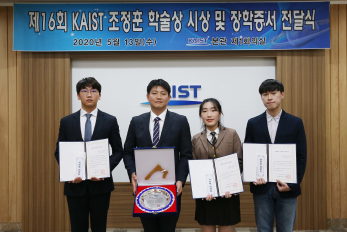
< From left: PhD candidate Yongtae Yun at KAIST, Dr. Dong-Hyun Cho at KARI, Seonju Yim at Kongju National University High School, and MS-PhD candidate Haun-Min Lee at Korea University > Dr. Dong-Hyun Cho, a senior researcher at the Korea Aerospace Research Institute (KARI), was honored as the recipient of the 16th Jeong Hun Cho Award. The award recognizes young scientists in the field of aerospace engineering. Dr. Cho earned his MS and PhD degrees from the KAIST Department of Aerospace Engineering in 2012, and served as a researcher at the Satellite Technology Research Center (SaTReC) at KAIST, before joining the Future Convergence Research Division at KARI. He won this year’s award and received 25 million KRW in prize money. Jeong Hun Cho, who was a PhD candidate in the Department of Aerospace Engineering at KAIST, passed away in a tragic lab accident in May 2003 and was awarded an honorary doctorate posthumously. His family endowed the award and scholarship in his memory. Since 2005, the scholarship has selected three young scholars every year who specialize in aerospace engineering from Cho’s alma maters of KAIST, Korea University, and Kongju National University High School. Dr. Dong-Hyun Cho was selected as this year’s awardee in recognition of his studies on the development and operation of KARISMA, a comprehensive software package for space debris collision risk management. Dr. Cho built a terrestrial testbed and produced a model for the development of a space debris elimination algorithm. He published six papers in SCI-level journals and wrote 35 symposium papers in the field of space development. He also applied or registered approximately 40 patents both in Korea and internationally. The Award Committee also selected three students as scholarship recipients: PhD candidate Yongtae Yun from the Department of Aerospace Engineering at KAIST received 4 million KRW, MS-PhD candidate Haun-Min Lee from the School of Mechanical Engineering at Korea University received 4 million KRW, and Seonju Yim from Kongju National University High School received 3 million KRW. (END)
-
Professor Tek-jin Nam Elected to DSR Int’l Advisor..
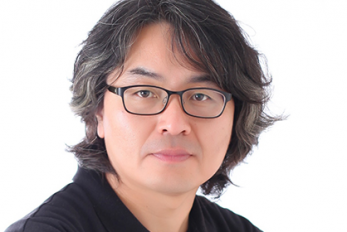
< Professor Tek-jin Nam > Professor Tek-jin Nam from the Department of Industrial Design was elected to serve on the first International Advisory Council (IAC) of the Design Research Society (DRS). The DRS, an academic society in the field of design research, was founded in the UK in 1966 with the mission of developing and promoting design research. The IAC is newly established under the new DRS governance structure, and its members are selected from distinguished design researchers recommended by DRS members around the globe. The new IAC members will carry out various activities offered by the DRS, which include innovating design research, strengthening the design researchers’ network and developing policies to nurture new researchers.
-

Professor Sukyung Park Named Presidential Science ..
< Professor Sukyung Park > Professor Sukyung Park from the Department of Mechanical Engineering was appointed as the science and technology adviser to the President Jae-in Moon on May 4. Professor Park, at the age of 47, became the youngest member of the president’s senior aide team at Chong Wa Dae. A Chong Wa Dae spokesman said on May 4 while announcing the appointment, “Professor Park, a talent with a great deal of policymaking participation in science and technology, will contribute to accelerating the government’s push for science and technology innovation, especially in the information and communications technology (ICT) sector.” Professor Park joined KAIST in 2004 as the first female professor of mechanical engineering. She is a biomechanics expert who has conducted extensive research on biometric mechanical behaviors. Professor Park is also a member of the KAIST Board of Trustees. Before that, she served as a senior researcher at the Korea Institute of Machinery and Materials (KIMM) as well as a member of the Presidential Advisory Council on Science and Technology. After graduating from Seoul Science High School as the first ever two-year graduate, Professor Park earned a bachelor and master’s degrees in mechanical engineering at KAIST. She then finished her Ph.D. from the University of Michigan. (END)
-
Researchers Present a Microbial Strain Capable of ..
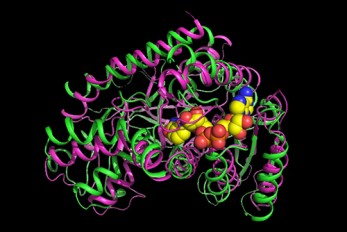
< From left:Ph.D.candidate Gi Bae Kim, Dr.Jung Ho Ahn, Ph.D.candiate Jong An Lee, and Distinguished Professor Sang Yup Lee > A research team led by Distinguished Professor Sang Yup Lee reported the production of a microbial strain capable of the massive production of succinic acid with the highest production efficiency to date. This strategy of integrating systems metabolic engineering with enzyme engineering will be useful for the production of industrially competitive bio-based chemicals. Their strategy was described in Nature Communications on April 23. The bio-based production of industrial chemicals from renewable non-food biomass has become increasingly important as a sustainable substitute for conventional petroleum-based production processes relying on fossil resources. Here, systems metabolic engineering, which is the key component for biorefinery technology, is utilized to effectively engineer the complex metabolic pathways of microorganisms to enable the efficient production of industrial chemicals. Succinic acid, a four-carbon dicarboxylic acid, is one of the most promising platform chemicals serving as a precursor for industrially important chemicals. Among microorganisms producing succinic acid, Mannheimia succiniciproducens has been proven to be one of the best strains for succinic acid production. The research team has developed a bio-based succinic acid production technology using the M. succiniciproducens strain isolated from the rumen of Korean cow for over 20 years and succeeded in developing a strain capable of producing succinic acid with the highest production efficiency. They carried out systems metabolic engineering to optimize the succinic acid production pathway of the M. succiniciproducens strain by determining the crystal structure of key enzymes important for succinic acid production and performing protein engineering to develop enzymes with better catalytic performance. As a result, 134 g per liter of succinic acid was produced from the fermentation of an engineered strain using glucose, glycerol, and carbon dioxide. They were able to achieve 21 g per liter per hour of succinic acid production, which is one of the key factors determining the economic feasibility of the overall production process. This is the world’s best succinic acid production efficiency reported to date. Previous production methods averaged 1~3 g per liter per hour. Distinguished professor Sang Yup Lee explained that his team’s work will significantly contribute to transforming the current petrochemical-based industry into an eco-friendly bio-based one. “Our research on the highly efficient bio-based production of succinic acid from renewable non-food resources and carbon dioxide has provided a basis for reducing our strong dependence on fossil resources, which is the main cause of the environmental crisis,” Professor Lee said. This work was supported by the Technology Development Program to Solve Climate Changes via Systems Metabolic Engineering for Biorefineries and the C1 Gas Refinery Program from the Ministry of Science and ICT through the National Research Foundation of Korea. < Figure: Protein engineering of key enzymes corresponding to succinic acid production. >
-
Highly Efficient and Stable Double Layer Solar Cel..
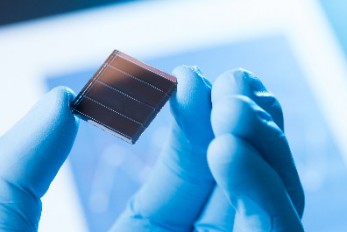
< (Front row from left) Professor Byungha Shin (KAIST), and PhD Candidate Daehan Kim (KAIST). (Back row from left) Professor Jin Young Kim (Seoul National University), Dr. Ik Jae Park (Seoul National University), and Professor Dong Hoe Kim (Sejong University). > Solar cells convert light into energy, but they can be inefficient and vulnerable to the environment, degrading with, ironically, too much light or other factors, including moisture and low temperature. An international research team has developed a new type of solar cell that can both withstand environmental hazards and is 26.7% more efficient in power conversion. They published their results on March 26 in Science. The researchers, led by Byungha Shin, a professor from the Department of Materials Science and Engineering at KAIST, focused on developing a new class of light-absorbing material, called a wide bandgap perovskite. The material has a highly effective crystal structure that can process the power needs, but it can become problematic when exposed to environmental hazards, such as moisture. Researchers have made some progress increasing the efficiency of solar cells based on perovskite, but the material has greater potential than what was previously achieved. To achieve better performance, Shin and his team built a double layer solar cell, called tandem, in which two or more light absorbers are stacked together to better utilize solar energy. To use perovskite in these tandem devices, the scientists modified the material’s optical property, which allows it to absorb a wider range of solar energy. Without the adjustment, the material is not as useful in achieving high performing tandem solar cells. The modification of the optical property of perovskite, however, comes with a penalty — the material becomes hugely vulnerable to the environment, in particular, to light. To counteract the wide bandgap perovskite’s delicate nature, the researchers engineered combinations of molecules composing a two-dimensional layer in the perovskite, stabilizing the solar cells. “We developed a high-quality wide bandgap perovskite material and, in combination with silicon solar cells, achieved world-class perovskite-silicon tandem cells,” Shin said. The development was only possible due to the engineering method, in which the mixing ratio of the molecules building the two-dimensional layer are carefully controlled. In this case, the perovskite material not only improved efficiency of the resulting solar cell but also gained durability, retaining 80% of its initial power conversion capability even after 1,000 hours of continuous illumination. This is the first time such a high efficiency has been achieved with a wide bandgap perovskite single layer alone, according to Shin. “Such high-efficiency wide bandgap perovskite is an essential technology for achieving ultra-high efficiency of perovskite-silicon tandem (double layer) solar cells,” Shin said. “The results also show the importance of bandgap matching of upper and lower cells in these tandem solar cells.” The researchers, having stabilized the wide bandgap perovskite material, are now focused on developing even more efficient tandem solar cells that are expected to have more than 30% of power conversion efficiency, something that no one has achieved yet, “Our ultimate goal is to develop ultra-high-efficiency tandem solar cells that contribute to the increase of shared solar energy among all energy sources,” Shin said. “We want to contribute to making the planet healthier.” This work was supported by the National Research Foundation of Korea, the Korea Institute of Energy Technology Evaluation and Planning, the Ministry of Trade Industry and Energy of Korea, and the U.S. Department of Energy. Other contributors include Daehan Kim, Jekyung Kim, Passarut Boonmongkolras, Seong Ryul Pae and Minkyu Kim, all of whom affiliated with the Department of Materials Science and Engineering at KAIST. Other authors include Byron W. Larson, Sean P. Dunfield, Chuanxiao Xiao, Jinhui Tong, Fei Zhang, Joseph J. Berry, Kai Zhu and Dong Hoe Kim, all of who are affiliated with the National Renewable Energy Laboratory in Colorado. Dunfield is also affiliated with the Materials Science and Engineering Program at the University of Colorado; Berry is also affiliated with the Department of Physics and the Renewable and Sustainable Energy Institute at the University of Colorado Boulder; and Kim is also affiliated with the Department of Nanotechnology and Advanced Materials Engineering at Sejong University. Hee Joon Jung and Vinayak Dravid of the Department of Materials Science and Engineering at Northwestern University; Ik Jae Park, Su Geun Ji and Jin Young Kim of the Department of Materials Science and Engineering at Seoul National University; and Seok Beom Kang of the Department of Nanotechnology and Advanced Materials Engineering of Sejong University also contributed. < High-resolution TEM study revealing atomic configuration of the 2D passivation layers. > < Structure and photovoltaic performance for the perovskite-Si tandem device. > Image credit: Professor Byungha Shin, KAIST Image usage restrictions: News organizations may use or redistribute this image, with proper attribution, as part of news coverage of this paper only. Publication: Kim et al. (2020) “Efficient, stable silicon tandem cells enabled by anion-engineered wide band gap perovskites”. Science. Available online at https://doi.org/10.1126/science.aba3433 Profile: Byungha Shin Professor byungha@kaist.ac.kr http://energymatlab.kaist.ac.kr/ Department of Materials Science and Engineering KAIST (END)
-
Ultrathin but Fully Packaged High-Resolution Camer..
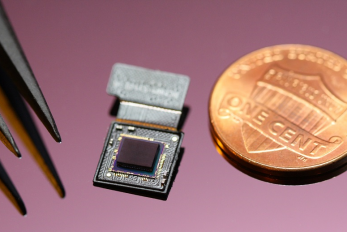
- Biologically inspired ultrathin arrayed camera captures super-resolution images. - < Ph.D. Candidate Kisoo Kim and Professor Ki-Hun Jeong > The unique structures of biological vision systems in nature inspired scientists to design ultracompact imaging systems. A research group led by Professor Ki-Hun Jeong have made an ultracompact camera that captures high-contrast and high-resolution images. Fully packaged with micro-optical elements such as inverted micro-lenses, multilayered pinhole arrays, and gap spacers on the image sensor, the camera boasts a total track length of 740 μm and a field of view of 73°. Inspired by the eye structures of the paper wasp species Xenos peckii, the research team completely suppressed optical noise between micro-lenses while reducing camera thickness. The camera has successfully demonstrated high-contrast clear array images acquired from tiny micro lenses. To further enhance the image quality of the captured image, the team combined the arrayed images into one image through super-resolution imaging. An insect’s compound eye has superior visual characteristics, such as a wide viewing angle, high motion sensitivity, and a large depth of field while maintaining a small volume of visual structure with a small focal length. Among them, the eyes of Xenos peckii and an endoparasite found on paper wasps have hundreds of photoreceptors in a single lens unlike conventional compound eyes. In particular, the eye structures of an adult Xenos peckii exhibit hundreds of photoreceptors on an individual eyelet and offer engineering inspiration for ultrathin cameras or imaging applications because they have higher visual acuity than other compound eyes. For instance, Xenos peckii’s eye-inspired cameras provide a 50 times higher spatial resolution than those based on arthropod eyes. In addition, the effective image resolution of the Xenos peckii’s eye can be further improved using the image overlaps between neighboring eyelets. This unique structure offers higher visual resolution than other insect eyes. The team achieved high-contrast and super-resolution imaging through a novel arrayed design of micro-optical elements comprising multilayered aperture arrays and inverted micro-lens arrays directly stacked over an image sensor. This optical component was integrated with a complementary metal oxide semiconductor image sensor. This is first demonstration of super-resolution imaging which acquires a single integrated image with high contrast and high resolving power reconstructed from high-contrast array images. It is expected that this ultrathin arrayed camera can be applied for further developing mobile devices, advanced surveillance vehicles, and endoscopes. Professor Jeong said, “This research has led to technological advances in imaging technology. We will continue to strive to make significant impacts on multidisciplinary research projects in the fields of microtechnology and nanotechnology, seeking inspiration from natural photonic structures.” This work was featured in Light Science & Applications last month and was supported by the National Research Foundation of Korea and the Ministry of Health and Welfare. < The ultrathin camera. > < Super-resolution imaging by array images. > Profile: Ki-Hun Jeong Professor kjeong@kaist.ac.kr http://biophotonics.kaist.ac.kr/ Department of Bio and Brain Engineering KAIST Profile: Kisoo Kim Ph.D. Candidate kisoo.kim1@kaist.ac.kr http://biophotonics.kaist.ac.kr/ Department of Bio and Brain Engineering KAIST
-
COVID-19 Map Shows How the Global Pandemic Spreads..
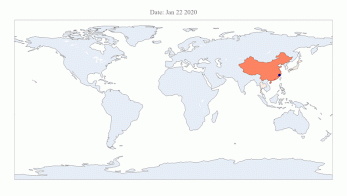
< COVID-19 Map > The COVID-19 map made by KAIST data scientists shows where and how the virus spreads from China, reportedly the epicenter of the disease. Professor Meeyoung Cha from the School of Computing and her group facilitated data based on the number of confirmed cases from January 22 to March 13 to analyze the trends of this global epidemic. The statistics include the number of confirmed cases, recoveries, and deaths across major continents based on the number of confirmed case data during that period. The moving dot on the map strikingly shows how the confirmed cases are moving across the globe. According to their statistics, the centroid of the disease starts from near Wuhan in China and moved to Korea, then through the European region via Italy and Iran. The data is collected by a graduate student, Sun Geng, who started the process during the time he was quarantined since coming back from his home in China. Gabriel Camilo Lima, an undergraduate student in the School of Computing who made the map, is now working remotely from his home in Brazil since all undergraduate students were required to move out of the dormitory last week. The university closed all undergraduate housing and advised the undergraduate students to go back home in a preventive measure to stop the virus from spreading across the campus. Gabriel said he calculated the centroid of all confirmed cases up to a given day. He explained, “I weighed each coordinate by the number of cases in that region and country and calculated an approximate center of gravity.” “The Earth is round, so the shortest path from Asia to Europe is often through Russia. In early March, the center of gravity of new cases was moving from Asia to Europe. Therefore, the centroid is moving to the west and goes through Russia, even though Russia has not reported many cases,” he said. Professor Cha, who is also responsible for the Data Science Group at the Institute for Basic Science as the Chief Investigator, said their group will continue to update the map using public data at https://ds.ibs.re.kr/index.php/covid-19/. < Sun Geng (Left) and Gabriel Camilo Lima (Right) >
-

Wearable Strain Sensor Using Light Transmittance H..
< Professor Inkyu Park (left) and Ph.D. Candidate Jimin Gu (right) > KAIST researchers have developed a novel wearable strain sensor based on the modulation of optical transmittance of a carbon nanotube (CNT)-embedded elastomer. The sensor is capable of sensitive, stable, and continuous measurement of physical signals. This technology, featured in the March 4th issue of ACS Applied Materials & Interfaces as a front cover article, shows great potential for the detection of subtle human motions and the real-time monitoring of body postures for healthcare applications. A wearable strain sensor must have high sensitivity, flexibility, and stretchability, as well as low cost. Those used especially for health monitoring should also be tied to long-term solid performance, and be environmentally stable. Various stretchable strain sensors based on piezo-resistive and capacitive principles have been developed to meet all these requirements. Conventional piezo-resistive strain sensors using functional nanomaterials, including CNTs as the most common example, have shown high sensitivity and great sensing performance. However, they suffer from poor long-term stability and linearity, as well as considerable signal hysteresis. As an alternative, piezo-capacitive strain sensors with better stability, lower hysteresis, and higher stretchability have been suggested. But due to the fact that piezo-capacitive strain sensors exhibit limited sensitivity and strong electromagnetic interference caused by the conductive objects in the surrounding environment, these conventional stretchable strain sensors are still facing limitations that are yet to be resolved. A KAIST research team led by Professor Inkyu Park from the Department of Mechanical Engineering suggested that an optical-type stretchable strain sensor can be a good alternative to resolve the limitations of conventional piezo-resistive and piezo-capacitive strain sensors, because they have high stability and are less affected by environmental disturbances. The team then introduced an optical wearable strain sensor based on the light transmittance changes of a CNT-embedded elastomer, which further addresses the low sensitivity problem of conventional optical stretchable strain sensors. In order to achieve a large dynamic range for the sensor, Professor Park and his researchers chose Ecoflex as an elastomeric substrate with good mechanical durability, flexibility, and attachability on human skin, and the new optical wearable strain sensor developed by the research group actually shows a wide dynamic range of 0 to 400%. In addition, the researchers propagated the microcracks under tensile strain within the film of multi-walled CNTs embedded in the Ecoflex substrate, changing the optical transmittance of the film. By doing so, it was possible for them to develop a wearable strain sensor having a sensitivity 10 times higher than conventional optical stretchable strain sensors. The proposed sensor has also passed the durability test with excellent results. The sensor’s response after 13,000 sets of cyclic loading was stable without any noticeable drift. This suggests that the sensor response can be used without degradation, even if the sensor is repeatedly used for a long time and in various environmental conditions. Using the developed sensor, the research team could measure the finger bending motion and used it for robot control. They also developed a three-axes sensor array for body posture monitoring. The sensor was able to monitor human motions with small strains such as a pulse near the carotid artery and muscle movement around the mouth during pronunciation. Professor Park said, “In this study, our group developed a new wearable strain sensor platform that overcomes many limitations of previously developed resistive, capacitive, and optical-type stretchable strain sensors. Our sensor could be widely used in a variety of fields including soft robotics, wearable electronics, electric skin, healthcare, and even entertainment.” This work was supported by the National Research Foundation (NRF) of Korea. < Figure 1. The front cover image of ACS Applied Materials & Interfaces, Volume 12, Issue 9. > < Figure 2. Schematic diagram of the sensor based on the optical transmittance changes of the CNT-embedded Ecoflex thin film. > < Figure 3. High sensitivity and reliable sensing performance of the proposed sensor and its application to finger bending motion monitoring. > < Figure 4. Posture monitoring using 3-axes strain sensor array, and pulse monitoring on the carotid artery. > Publication: Jimin Gu, Donguk Kwon, Junseong Ahn, and Inkyu Park. (2020) “Wearable Strain sensors Using Light Transmittance Change of Carbon Nanotube-Embedded Elastomers with Microcracks” ACS Applied Materials & Interfaces. Volume 12. Issue 9. Available online at https://doi.org/10.1021/acsami.9b18069 Profile: Inkyu Park Professor inkyu@kaist.ac.kr http://mintlab1.kaist.ac.kr Micro/Nano Transducers Laboratory (MINT Lab) Department of Mechanical Engineering (ME) Korea Advanced Institute of Science and Technology (KAIST) Profile: Jimin Gu Ph.D. Candidate mint9411@kaist.ac.kr http://mintlab1.kaist.ac.kr MINT Lab KAIST ME
-
[arirang] KAIST researchers develop mask that can ..
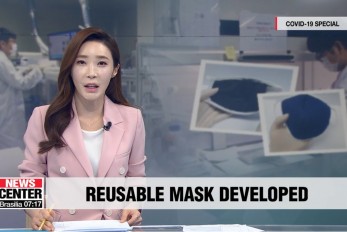
Updated: 2020-03-16 17:07:20 KST A research team at the Korea Advanced Institute of Science and Technology, or KAIST, has succeeded in developing a mask that can be reused even after being washed 20 times. Welcome news in Korea, where there's a severe mask shortage. The researchers say the nanofiber filter inside the cotton mask, after all the washes, maintained 94 percent of its original effectiveness. It can be used for more than a month when disinfected with ethanol. The team say they hope the mask can help solve the shortage as well as the environmental problems caused when masks are thrown away. Reporter : jhee@arirang.com >> arirang News
-
A Single Biological Factor Predicts Distinct Corti..
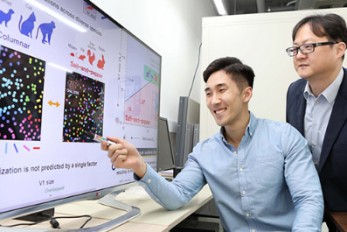
-A KAIST team’s mathematical sampling model shows that retino-cortical mapping is a prime determinant in the topography of cortical organization.- < Ph.D. Candidate Jaeson Jang (left), Professor Se-Bum Paik (center), and Ph.D. Candidate Min Song (right) > Researchers have explained how visual cortexes develop uniquely across the brains of different mammalian species. A KAIST research team led by Professor Se-Bum Paik from the Department of Bio and Brain Engineering has identified a single biological factor, the retino-cortical mapping ratio, that predicts distinct cortical organizations across mammalian species. This new finding has resolved a long-standing puzzle in understanding visual neuroscience regarding the origin of functional architectures in the visual cortex. The study published in Cell Reports on March 10 demonstrates that the evolutionary variation of biological parameters may induce the development of distinct functional circuits in the visual cortex, even without species-specific developmental mechanisms. In the primary visual cortex (V1) of mammals, neural tuning to visual stimulus orientation is organized into one of two distinct topographic patterns across species. While primates have columnar orientation maps, a salt-and-pepper type organization is observed in rodents. For decades, this sharp contrast between cortical organizations has spawned fundamental questions about the origin of functional architectures in the V1. However, it remained unknown whether these patterns reflect disparate developmental mechanisms across mammalian taxa, or simply originate from variations in biological parameters under a universal development process. To identify a determinant predicting distinct cortical organizations, Professor Paik and his researchers Jaeson Jang and Min Song examined the exact condition that generates columnar and salt-and-pepper organizations, respectively. Next, they applied a mathematical model to investigate how the topographic information of the underlying retinal mosaics pattern could be differently mapped onto a cortical space, depending on the mapping condition. The research team proved that the retino-cortical feedforwarding mapping ratio appeared to be correlated to the cortical organization of each species. In the model simulations, the team found that distinct cortical circuitries can arise from different V1 areas and retinal ganglion cell (RGC) mosaic sizes. The team’s mathematical sampling model shows that retino-cortical mapping is a prime determinant in the topography of cortical organization, and this prediction was confirmed by neural parameter analysis of the data from eight phylogenetically distinct mammalian species. Furthermore, the researchers proved that the Nyquist sampling theorem explains this parametric division of cortical organization with high accuracy. They showed that a mathematical model predicts that the organization of cortical orientation tuning makes a sharp transition around the Nyquist sampling frequency, explaining why cortical organizations can be observed in either columnar or salt-and-pepper organizations, but not in intermediates between these two stages. Professor Paik said, “Our findings make a significant impact for understanding the origin of functional architectures in the visual cortex of the brain, and will provide a broad conceptual advancement as well as advanced insights into the mechanism underlying neural development in evolutionarily divergent species.” He continued, “We believe that our findings will be of great interest to scientists working in a wide range of fields such as neuroscience, vision science, and developmental biology.” This work was supported by the National Research Foundation of Korea (NRF). < Image caption: Species-specific organization of the visual cortex> Image credit: Professor Se-Bum Paik, KAIST Image usage restrictions: News organizations may use or redistribute this image, with proper attribution, as part of news coverage of this paper only. Publication: Jaeson Jang, Min Song, and Se-Bum Paik. (2020). Retino-cortical mapping ratio predicts columnar and salt-and-pepper organization in mammalian visual cortex. Cell Reports. Volume 30. Issue 10. pp. 3270-3279. Available online at https://doi.org/10.1016/j.celrep.2020.02.038 Profile: Se-Bum Paik Assistant Professor sbpaik@kaist.ac.kr http://vs.kaist.ac.kr/ VSNN Laboratory Department of Bio and Brain Engineering Program of Brain and Cognitive Engineering http://kaist.ac.kr Korea Advanced Institute of Science and Technology (KAIST) Daejeon, Republic of Korea Profile: Jaeson Jang Ph.D. Candidate jaesonjang@kaist.ac.kr Department of Bio and Brain Engineering, KAIST Profile: Min Song Ph.D. Candidate night@kaist.ac.kr Program of Brain and Cognitive Engineering
-
3D Hierarchically Porous Nanostructured Catalyst H..
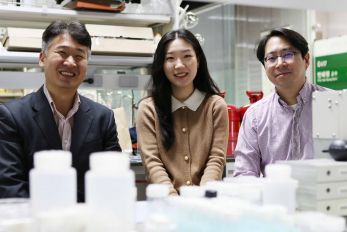
- This new catalyst will bring CO2 one step closer to serving as a sustainable energy source. - < Professor Seokwoo Jeon (left), Ph.D. Candidate Gayea Hyun (center), Professor Jihun Oh (right) > KAIST researchers developed a three-dimensional (3D) hierarchically porous nanostructured catalyst with carbon dioxide (CO2) to carbon monoxide (CO) conversion rate up to 3.96 times higher than that of conventional nanoporous gold catalysts. This new catalyst helps overcome the existing limitations of the mass transport that has been a major cause of decreases in the CO2 conversion rate, holding a strong promise for the large-scale and cost-effective electrochemical conversion of CO2 into useful chemicals. As CO2 emissions increase and fossil fuels deplete globally, reducing and converting CO2 to clean energy electrochemically has attracted a great deal of attention as a promising technology. Especially due to the fact that the CO2 reduction reaction occurs competitively with hydrogen evolution reactions (HER) at similar redox potentials, the development of an efficient electrocatalyst for selective and robust CO2 reduction reactions has remained a key technological issue. Gold (Au) is one of the most commonly used catalysts in CO2 reduction reactions, but the high cost and scarcity of Au pose obstacles for mass commercial applications. The development of nanostructures has been extensively studied as a potential approach to improving the selectivity for target products and maximizing the number of active stable sites, thus enhancing the energy efficiency. However, the nanopores of the previously reported complex nanostructures were easily blocked by gaseous CO bubbles during aqueous reactions. The CO bubbles hindered mass transport of the reactants through the electrolyte, resulting in low CO2 conversion rates. In the study published in the Proceedings of the National Academy of Sciences of the USA (PNAS) on March 4, a research group at KAIST led by Professor Seokwoo Jeon and Professor Jihun Oh from the Department of Materials Science and Engineering designed a 3D hierarchically porous Au nanostructure with two different sizes of macropores and nanopores. The team used proximity-field nanopatterning (PnP) and electroplating techniques that are effective for fabricating the 3D well-ordered nanostructures. The proposed nanostructure, comprised of interconnected macroporous channels 200 to 300 nanometers (nm) wide and 10 nm nanopores, induces efficient mass transport through the interconnected macroporous channels as well as high selectivity by producing highly active stable sites from numerous nanopores. As a result, its electrodes show a high CO selectivity of 85.8% at a low overpotential of 0.264 V and efficient mass activity that is up to 3.96 times higher than that of de-alloyed nanoporous Au electrodes. “These results are expected to solve the problem of mass transfer in the field of similar electrochemical reactions and can be applied to a wide range of green energy applications for the efficient utilization of electrocatalysts,” said the researchers. This work was supported by the National Research Foundation (NRF) of Korea. < Figure 1. Fabrication procedures of various gold nanostructures through proximity-field nanopatterning (PnP) and electroplating techniques. > < Figure 2. Top view of scanning electron microscope (SEM) images of the hierarchically porous gold nanostructure (Scale bars, 3 μm). > < Figure 3. Schematic illustration and the cross-sectional view with the expected reaction pathway for the hierarchically porous gold and nanoporous gold electrodes. > Image credit: Professor Seokwoo Jeon and Professor Jihun Oh, KAIST Image usage restrictions: News organizations may use or redistribute this image, with proper attribution, as part of news coverage of this paper only. Publication: Hyun et al. (2020) Hierarchically porous Au nanostructures with interconnected channels for efficient mass transport in electrocatalytic CO2 reduction. Proceedings of the National Academy of Sciences of the USA (PNAS). Available online at https://doi.org/10.1073/pnas.1918837117 Profile: Seokwoo Jeon, PhD Professor jeon39@kaist.ac.kr http://fdml.kaist.ac.kr Department of Materials Science and Engineering (MSE) https://www.kaist.ac.kr Korea Advanced Institute of Science and Technology (KAIST) Daejeon, Republic of Korea Profile: Jihun Oh, PhD Associate Professor jihun.oh@kaist.ac.kr http://les.kaist.ac.kr Department of Materials Science and Engineering (MSE) Department of Energy, Environment, Water and Sustainability (EEWS) KAIST Profile: Gayea Hyun PhD Candidate cldywkd93@kaist.ac.kr http://fdml.kaist.ac.kr Flexible Devices and Metamaterials Laboratory (FDML) Department of Materials Science and Engineering (MSE) KAIST Profile: Jun Tae Song, PhD Assistant Professor song.juntae@cstf.kyushu-u.ac.jp http://www.cstf.kyushu-u.ac.jp/~ishihara-lab/ Department of Applied Chemistry https://www.kyushu-u.ac.jp Kyushu University Fukuoka, Japan

291 Daehak-ro, Yuseong-gu, Daejeon, Korea 34141
KAIST College of Engineering
T.+82-42-350-2114
F.+82-42-350-2210 (2220)
ⓒ KAIST College of Engineering. All rights reserved.