


Faculty News
-
3D Printing Becomes Stronger and More Economical w..
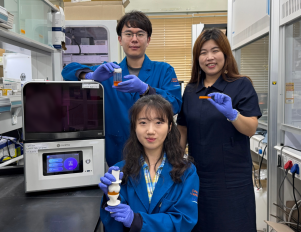
<(Front) Ph.D. candidate Jisoo Nam, (Back row, from left) Ph.D. candidate Boxin Chen, Professor Miso Kim> Photocurable 3D printing, widely used for everything from dental treatments to complex prototype manufacturing, is fast and precise but has the limitation of being fragile and easily broken by impact. A KAIST research team has developed a new technology to overcome this weakness, paving the way for the more robust and economical production of everything from medical implants to precision machine parts. KAIST (President Kwang Hyung Lee) announced on the 29th that Professor Miso Kim's research team in the Department of Mechanical Engineering has developed a new technology that fundamentally resolves the durability limitations of photocurable 3D printing. Digital Light Processing (DLP)-based 3D printing is a technique that uses light to solidify liquid resin (polymer) to rapidly manufacture precise structures, used in various fields such as dentistry and precision machinery. While traditional injection molding offers excellent durability, it requires significant time and cost for mold fabrication. In contrast, photocurable 3D printing allows for flexible shape realization but has a durability drawback. Professor Kim's team solved this problem by combining two key elements: A new photocurable resin material that absorbs shock and vibration while allowing for a wide range of properties from rubber to plastic. A machine learning-based design technology that automatically assigns optimal strength to each part of the structure. <Figure 1. Schematic of a new manufacturing technology for high-durability photocurable 3D printing using light-controlled gradient structures. This approach integrates the development of stiffness-controllable viscoelastic polyurethane acrylate (PUA) materials, machine learning-based property gradient optimization, and grayscale DLP 3D printing. The technology enhances damping performance and alleviates stress concentration, providing an integrated solution for high reliability, durability, and customized manufacturing. It demonstrates potential applications in structural components subjected to repetitive loads such as joints, automotive interior parts, and precision machinery components> The research team developed a Polyurethane Acrylate (PUA) material incorporating dynamic bonds, which significantly increases shock and vibration absorption capability compared to existing materials. Furthermore, they successfully applied 'grayscale DLP' technology, which controls the light intensity to achieve different strengths from a single resin composition, thereby assigning customized strength to specific areas within the structure. This concept is inspired by the harmonious and different roles played by bone and cartilage in the human body. A machine learning algorithm automatically proposes the optimal strength distribution by analyzing the structure and load conditions. This organically connects material development and structural design, enabling customized strength distribution. The economic efficiency is also noteworthy. Previously, expensive 'multi-material printing' technology was required to achieve diverse material properties, but this new technology yields the same effect with a single material and a single process, significantly reducing production costs. It eliminates the need for complex equipment or material management, and the AI-based structural optimization shortens research and development time and product design costs. Professor Miso Kim explained, "This technology simultaneously expands the degrees of freedom in material properties and structural design. Patient-specific implants will become more durable and comfortable, and precision machine parts can be manufactured more robustly." She added, "The fact that it secures economic viability by realizing various strengths with a single material and single process is highly significant," and "We anticipate its utilization across various industrial fields such as biomedical, aerospace, and robotics." The research was spearheaded by Professor Miso Kim's team at the KAIST Department of Mechanical Engineering, with Ph.D. candidate Jisoo Nam as the first author. Boxin Chen, a student from Sungkyunkwan University, also contributed to the collaborative research. The findings were published online on July 16 in the world-renowned journal in materials science, Advanced Materials (IF 26.8). Recognizing the research's excellence, it was also selected for the journal's Frontispiece. Paper Title: Machine Learning-Driven Grayscale Digital Light Processing for Mechanically Robust 3D-Printed Gradient Materials DOI: 10.1002/adma.202504075 The achievements of this research have brought Professor Miso Kim significant international attention, as she simultaneously received the 'Wiley Rising Star Award' and the 'Wiley Women in Materials Science Award' in July 2025, hosted by the international academic publisher Wiley. The Wiley Rising Star Award is given to emerging researchers with the potential for academic leadership, and the Wiley Women in Materials Science Award is a prestigious honor established to celebrate outstanding female scientists in the field of materials science. <Figure 2. Frontispiece image (scheduled for Issue 42). Multi-property structure fabricated using a photocurable 3D printer. By varying the projector light intensity by location, stronger light creates rigid regions while weaker light forms flexible ones. AI designs an optimized pattern for the structural shape to prevent fracture and reinforce the overall strength.> This research was supported by the National Research Foundation of Korea (NRF) grants funded by the Korean government (MSIT) (Nos. NRF-2021R1A2C2095767, RS-2023-00254689, and RS-2024-00433654).
-

KAIST Develops Semiconductor Neuron that Remembers..
<(From left, clockwise) Professor Kyung Min Kim, Min-Gu Lee, Dae-Hee Kim, Dr. Han-Chan Song, Tae-Uk Ko, Moon-Gu Choi, and Eun-Young Kim> The human brain does more than simply regulate synapses that exchange signals; individual neurons also process information through “intrinsic plasticity,” the adaptive ability to become more sensitive or less sensitive depending on context. Existing artificial intelligence semiconductors, however, have struggled to mimic this flexibility of the brain. A KAIST research team has now developed next-generation, ultra-low-power semiconductor technology that implements this ability as well, drawing significant attention. KAIST (President Kwang Hyung Lee) announced on September 28 that a research team led by Professor Kyung Min Kim of the Department of Materials Science and Engineering developed a “Frequency Switching Neuristor” that mimics “intrinsic plasticity,” a property that allows neurons to remember past activity and autonomously adjust their response characteristics. “Intrinsic plasticity” refers to the brain’s adaptive ability- for example, becoming less startled when hearing the same sound repeatedly, or responding more quickly to a specific stimulus after repeated training. The “Frequency Switching Neuristor” is an artificial neuron device that autonomously adjusts the frequency of its signals, much like how the brain becomes less startled by repeated stimuli or, conversely, increasingly sensitive through training. The research team combined a “volatile Mott memristor,” which reacts momentarily before returning to its original state, with a “non-volatile memristor,” which remembers input signals for long periods of time. This enabled the implementation of a device that can freely control how often a neuron fires (its spiking frequency). <Figure 1. Conceptual comparison between a neuron and a frequency-tunable neuristor. The intrinsic plasticity of brain neurons regulates excitability through ion channels. Similarly, the frequency-tunable neuristor uses a volatile Mott device to generate current spikes, while a non-volatile VCM device adjusts resistance states to realize comparable frequency modulation characteristics> In this device, neuronal spike signals and memristor resistance changes influence each other, automatically adjusting responses. Put simply, it reproduces within a single semiconductor device how the brain becomes less startled by repeated sounds or more sensitive to repeated stimuli. To verify the effectiveness of this technology, the researchers conducted simulations with a “sparse neural network.” They found that, through the neuron’s built-in memory function, the system achieved the same performance with 27.7% less energy consumption compared to conventional neural networks. They also demonstrated excellent resilience: even if some neurons were damaged, intrinsic plasticity allowed the network to reorganize itself and restore performance. In other words, artificial intelligence using this technology consumes less electricity while maintaining performance, and it can compensate for partial circuit failures to resume normal operation. Professor Kyung Min Kim, who led the research, stated, “This study implemented intrinsic plasticity, a core function of the brain, in a single semiconductor device, thereby advancing the energy efficiency and stability of AI hardware to a new level. This technology, which enables devices to remember their own state and adapt or recover even from damage, can serve as a key component in systems requiring long-term stability, such as edge computing and autonomous driving.” This research was carried out with Dr. Woojoon Park (now at Forschungszentrum Jülich, Germany) and Dr. Hanchan Song (now at ETRI) as co-first authors, and the results were published online on August 18 in Advanced Materials (IF 26.8), a leading international journal in materials science. ※ Paper title: “Frequency Switching Neuristor for Realizing Intrinsic Plasticity and Enabling Robust Neuromorphic Computing,” DOI: 10.1002/adma.202502255 This research was supported by the National Research Foundation of Korea and Samsung Electronics.
-

Thinking outside the box to Fabricate Customized 3..
<(From Left) Professor Yoonkey Nam, Dr. Dongjo Yoon from the Department of Bio and Brain Engineering> Cultured neural tissues have been widely used as a simplified experimental model for brain research. However, existing devices for growing and recording neural tissues, which are manufactured using semiconductor processes, have limitations in terms of shape modification and the implementation of three-dimensional (3D) structures. By "thinking outside the box," a KAIST research team has successfully created a customized 3D neural chip. They first used a 3D printer to fabricate a hollow channel structure, then used capillary action to automatically fill the channels with conductive ink, creating the electrodes and wiring. This achievement is expected to significantly increase the design freedom and versatility of brain science and brain engineering research platforms. On the 25th, KAIST announced that a research team led by Professor Yoonkey Nam from the Department of Bio and Brain Engineering has successfully developed a platform technology that overcomes the limitations of traditional semiconductor-based manufacturing. This technology allows for the precise fabrication of "3D microelectrode array" (neural interfaces with multiple microelectrodes arranged in a 3D space to measure and stimulate the electrophysiological signal of neurons) in various customized forms for in vitro culture chips. Existing 3D microelectrode array fabrication, based on semiconductor processes, has limited 3D design freedom and is expensive. While 3D printing-based fabrication techniques have recently been proposed to overcome these issues, they still have limitations in terms of 3D design freedom for various in vitro neural network structures because they follow the traditional sequence of "conductive material patterning → insulator coating → electrode opening." The KAIST research team leveraged the excellent 3D design freedom provided by 3D printing technology and its ability to use printed materials as insulators. By reversing the traditional process, they established an innovative method that allows for more flexible design and functional measurement of 3D neuronal network models for in vitro culture. <Schematic Diagram of an Integrated Cell Culture Substrate-Microelectrode Array Platform for In Vitro Cultured 3D Neural Network Models> First, they used a 3D printer to print a hollow 3D insulator with micro-tunnels. This structure was designed to serve as a stable scaffold for conductive materials in 3D space while also supporting the creation of various 3D neuronal networks. They then demonstrated that by using capillary action to fill these internal micro-tunnels with conductive ink, they could create a 3D scaffold-microelectrode array with more freely arranged microelectrodes within a complex 3D culture support structure. The new platform can be used to create various chip shapes, such as probe-type, cube-type, and modular-type, and supports the fabrication of electrodes using different materials like graphite, conductive polymers, and silver nanoparticles. This allows for the simultaneous measurement of multichannel neural signals from both inside and outside the 3D neuronal network, enabling precise analysis of the dynamic interactions and connectivity between neurons. Professor Nam stated, "This research, which combines 3D printing and capillary action, is an achievement that significantly expands the freedom of neural chip fabrication." He added that it will contribute to the advancement of fundamental brain science research using neural tissue, as well as applied fields like cell-based biosensors and biocomputing. Dr. Dongjo Yoon from KAIST's Department of Bio and Brain Engineering participated as the first author of the study. The research findings were published online in the international academic journal Advanced Functional Materials (June 25th issue). ※Paper Title: Highly Customizable Scaffold-Type 3D Microelectrode Array Platform for Design and Analysis of the 3D Neuronal Network In Vitro This research was supported by the Consolidator Grants Program and the Global Basic Research Laboratory Program of the National Research Foundation of Korea.
-

Mobility 2025 Technology Demonstration Day Held.....
< Kitae Jang, Director of Mobility Research Institute, Hyeong-sik Jeon, Vice Governor for Political Affairs of South Chungcheong Province and demonstration officials > KAIST's e announced on the September 23rd that it held the "2025 Technology Demonstration Day" at the Naepo Knowledge Industry Center in Chungcheongnam-do to showcase successful cases of its research findings being adopted by the industry. The event was organized to present the process of commercializing KAIST's accumulated mobility research achievements through collaboration with companies. The KAIST Mobility Research Institute aims to solve our society's mobility problems by conducting industry-academia research in various technology fields, including autonomous driving, Urban Air Mobility (UAM/UAV), eco-friendly mobility technologies, as well as artificial intelligence (AI) and energy. This demonstration was the result of a project linked to a consignment from Chungcheongnam-do, and it showed a practical example of research achievements connecting with the local industry. At the demonstration, achievements that have entered the commercialization stage were presented with collaborating companies, including faculty startups FutureEV Co., Ltd. (CEO: Kim Kyung-soo), Dochak Co., Ltd. (CEO: Kim In-hee), and alumnus startup NOTA Co., Ltd. (CEO: Chae Myung-soo). The six core technologies unveiled were: △Mobile Energy Storage System (ESS) Power Platform △Naepo Digital Twin △Autonomous Driving Robots Specialized for SMEs △Remote-Driving Valet Parking △Autonomous Driving Testbed △AI Computing Center. < Image of the remote-controlled autonomous vehicle developed by Professor In-hee Kim > The "Mobile Energy Storage System (ESS) Power Platform" is a technology led by Professor Lee Yoon-gu and co-developed with FutureEV Co., Ltd., ECOCAB Co., Ltd., Hanyang Electric Co., Ltd., and Uptech Co., Ltd. It's a solution that can establish a stable power grid in areas with difficult power supply, such as disaster sites or islands, proving its commercial potential in the eco-friendly power sector. The "Naepo Digital Twin" was commercialized by a research team led by Senior Researcher Kim Tae-kyun in collaboration with Dochak Co., Ltd. It can simulate real-world city and traffic conditions in a 3D virtual environment for traffic monitoring, situation prediction, disaster response, and policy verification. It's gaining attention as a core technology for building smart cities. The "Autonomous Driving Robots Specialized for SMEs" was developed by research teams led by Professors Kim Kyung-soo and Choi Geun-ha in collaboration with L-Line Co., Ltd. and Torrent Systems Co., Ltd. This autonomous logistics robot, optimized for the logistics environment of small and medium-sized enterprises, demonstrated precise movement and stacking of logistics racks inside a factory at the event, confirming the potential for innovation in the SME manufacturing sector. The "Remote-Driving Valet Parking Technology" is being commercialized by Professor Kim In-hee in collaboration with Dochak Co., Ltd., Torrent Systems Co., Ltd., E-motion Co., Ltd., and the National Science and Technology Research Network KREONET (operated by the Korea Institute of Science and Technology Information). During the demonstration, a vehicle remotely controlled from Daejeon traveled to the Naepo Research Institute and completed parking at its destination, proving the stability and practicality of remote autonomous driving. < Image of the KAIST Mobility Research Institute Technology Demonstration Day poster > The "Autonomous Driving Testbed" is a platform built by Professors Ahn Hee-jin and Noh Min-kyun. It's an example of expanding research achievements in reduced-scale vehicle-based autonomous driving into a platform for education and industrial verification. The KAIST Mobility Research Institute plans to use this as a foundation for the "2025 KAIST Mobility Challenge Competition" next year to simultaneously foster next-generation talent and promote technology commercialization. The "AI Computing Center" was unveiled by NOTA Co., Ltd., which is soon to be listed on KOSDAQ. The company introduced its RE100-based power system and AI optimization technology and presented its vision for collaboration with tenant companies, stating its goal to contribute to the expansion of the AI ecosystem. Kitae Jang, Director of the KAIST Mobility Research Institute, stated, "This demonstration was an opportunity to show the concrete process of KAIST's research achievements being adopted by the industry." He added, "We will continue to lead the commercialization of future mobility and AI technologies and the development of local industries through close collaboration with local governments and companies." KAIST President Kwang Hyung Lee emphasized, "KAIST's mission is to contribute to the nation and local communities through technological innovation. We find it meaningful to see our research achievements creating real change in the industry and will continue to lead global mobility innovation and the creation of new value through collaboration with companies and local governments."
-

MICCAI 2025 Eve KAIST Day Successfully Held
< Scene of the KAIST Day Symposium Lectures > KAIST announced on the September 23rd that the 'KAIST Day' special symposium, held on the eve of 'MICCAI 2025' at the Jeong Geun-mo Conference Hall of the KAIST Academic and Cultural Center on September 22, was successfully held with the attendance of more than 30 overseas scholars and 200 domestic researchers and students. This event was a special program prepared to commemorate the hosting of MICCAI 2025 (The 28th International Conference on Medical Image Computing and Computer Assisted Intervention, Conference Chair: Professor Jina Park of KAIST School of Computing), the world's largest medical imaging conference. It was sponsored by the KAIST College of Engineering and Daejeon City, and was held under the theme of "From Insight to Intervention: Intelligent Imaging in Biomedicine." KAIST and world-class scholars gathered to share the latest research results combining medical imaging and artificial intelligence, and to have an in-depth discussion on the future direction of next-generation medical technology, encompassing diagnosis and treatment. Seven world-renowned scholars from the Americas, Europe, and Asia introduced their latest research, and about 30 overseas scholars toured KAIST's advanced medical imaging infrastructure and sought possibilities for collaboration by interacting with domestic researchers. In addition, attending domestic researchers and students had the opportunity for collaboration and international joint research through a networking session. < A group photo from KAIST Day with President Kwang Hyung Lee and Conference Chair Jina Park > This event provided an opportunity for domestic researchers to meet world-class scholars ahead of the opening of MICCAI 2025 and served as a starting point and symbolic place for KAIST and Daejeon City to foster Korea as a global hub for medical AI research. The event was planned and moderated by Professor Seungryong Cho and Associate Vice President Hyunju Lee, and was composed of four sessions. First, Professor Hyunwook Park introduced the history and development of medical imaging research at KAIST. Following this, in the "AI for Diagnosis & Disease Understanding" session, Professors Anne Martel, Kenji Suzuki, Hayit Greenspan, and Dimitris Metaxas presented their latest research on AI-based medical imaging, including cancer diagnosis, early detection, rare disease analysis, and multi-modal fusion. In the next "Imaging Intelligence for Intervention" session, Professors Nasir Navab, Yongkwan Park, James Ji, Leo Joskowicz, and Hyunmin Bae shared clinical application cases such as AR/VR surgical assistance, ultra-high-resolution imaging, atlas-based analysis, surgical planning support, and personalized treatment with neuroimaging. Each presentation demonstrated the possibilities of future medical imaging expanding beyond diagnosis to treatment and personalized medicine, and active exchanges continued through discussions and Q&A. After the lectures, overseas researchers toured KAIST's advanced infrastructure and conducted in-depth discussions with domestic researchers. In addition, with the support of NVIDIA, the "NVIDIA Isaac for Healthcare Hands-on Lab" was held, allowing researchers and students to directly experience the latest AI medical platform. < Invited speakers and attendees of the symposium > Professor Jina Park of the KAIST School of Computing and Conference Chair of MICCAI 2025 said, "MICCAI is the world's top-level medical AI conference with a focus on clinical application. We organized this event to introduce KAIST's challenging research to the international community and to create new synergy through academic exchange. We expect MICCAI 2025, which will be held from the 23rd to the 27th at the Daejeon Convention Center, to become a representative international academic event for Daejeon, with more than 3,200 people registered." KAIST President Kwang Hyung Lee said, "The hosting of MICCAI 2025 is an achievement that shows the international status of Korean science and technology. In particular, this pre-conference symposium held at KAIST was a meaningful event where world-class scholars gathered to discuss the future of medical imaging and AI, and it was an opportunity to once again confirm KAIST's status. KAIST will continue to take the lead in research and education that contributes to the promotion of human health by expanding global cooperation." ※ MICCAI 2025 Website: https://conferences.miccai.org/2025/en/
-

Accurate Real time ECG Measurement While Comfortab..
< (From left) Professor Chul Kim of the Department of Bio and Brain Engineering, Ph.D. candidate Minjae Kim, researcher Premravee Teeravichayangoon > KAIST's research team has developed a technology that can measure electrocardiogram (ECG) and heart rate variability (HRV) in real time by simply lying on a bed with clothes on, without having to go to the hospital. This technology is expected to evolve into a daily heart health monitoring platform in conjunction with remote healthcare, and further expand into various bio-healthcare fields such as sleep and stress analysis, contributing to personalized prevention and early diagnosis for patients. KAIST announced on the 19th that Professor Chul Kim's research team from the Department of Bio and Brain Engineering has developed an 'in-bed cardiac monitoring on-device system'. The research team manufactured a flexible substrate sensor that integrates the electronic circuit and electrodes into one to increase precision, and implemented an integrated system that can perform signal-noise separation, heart beat signal (R-peak) detection, and heart rate variability analysis in real time through on-device signal processing. Existing ECG measurement had the inconvenience of visiting a hospital, taking off clothes, and attaching wet electrodes to the skin. Because of this, long-term monitoring was difficult, and it was not easy for the elderly or patients with chronic diseases to use it daily. Non-contact methods also had a technical limitation of being vulnerable to external noise. To solve these problems, the research team applied a circuit that blocks external noise (active shielding) and a circuit that stably captures minute current changes in the human body (right-leg drive circuit). In addition, they implemented a mathematical transformation technique (wavelet transform) that extracts only the important parts from the heart beat signal and a calculation method (peak detection algorithm) that accurately identifies the moment of the heart's electrical beat (R-peak) as on-device signal processing techniques, allowing for precise real-time analysis of the signal. As a result, users can obtain stable and accurate ECG signals even when lying on their backs with clothes on. < Figure. Overall structural diagram of the developed non-contact in-bed cardiac monitoring on-device system, schematic diagram of the R-peak detection algorithm, real-time ECG and HRV measurement screen > This research presents new possibilities for managing chronic cardiovascular diseases and supporting the health of the elderly, as it can be easily used not only in hospitals but also at home. Professor Chul Kim said, "This system, which can extract signals in real time even in a noisy environment, can be used to easily check heart health in daily life," and added, "In the future, it will become the foundation of sleep health management by adding the measurement of various bio-signals." This paper, in which Ph.D. candidate Minjae Kim and researcher Premravee Teeravichayangoon from the Department of Bio and Brain Engineering participated as co-first authors, was published online in the international journal 'Biosensors and Bioelectronics' on August 9, 2025. ※ Paper title: A homecare in-bed hardware system for precise real-time ECG and HRV monitoring with layered clothing. DOI: https://doi.org/10.1016/j.bios.2025.117838 ※ Author information: Minjae Kim (KAIST Department of Bio and Brain Engineering, First Author), Premravee Teeravichayangoon (KAIST Department of Bio and Brain Engineering, First Author), Chul Kim (KAIST Department of Bio and Brain Engineering, Corresponding Author) Meanwhile, this research was carried out with the support of the National Research Foundation of Korea's Basic Research Lab and Bio-medical Technology Development Project, and the KAIST-Ceragem Future Healthcare Research Center.
-

Next-Generation Humanoid Robot Capable of Moonwalk..
<From the middle of the back row, clockwise: Professor Hae-Won Park, Dongyun Kang (Ph.D. candidate), Hajun Kim (Ph.D. candidate), JongHun Choe (Ph.D. candidate), Min-su Kim (Research Professor)> KAIST research team's independently developed humanoid robot boasts world-class driving performance, reaching speeds of 12km/h, along with excellent stability, maintaining balance even with its eyes closed or on rough terrain. Furthermore, it can perform complex human-specific movements such as duck walk and moonwalk, drawing attention as a next-generation robot platform that can be utilized in actual industrial settings. Professor Park Hae-won's research team at the Humanoid Robot Research Center (HuboLab) of KAIST's Department of Mechanical Engineering announced on the 19th that they have independently developed the lower body platform for a next-generation humanoid robot. The developed humanoid is characterized by its design tailored for human-centric environments, targeting a height (165cm) and weight (75kg) similar to that of a human. The significance of the newly developed lower body platform is immense as the research team directly designed and manufactured all core components, including motors, reducers, and motor drivers. By securing key components that determine the performance of humanoid robots with their own technology, they have achieved technological independence in terms of hardware. In addition, the research team trained an AI controller through a self-developed reinforcement learning algorithm in a virtual environment, successfully applied it to real-world environments by overcoming the Sim-to-Real Gap, thereby securing technological independence in terms of algorithms as well. <Developed 'KAIST Humanoid' Lower Body Platform> Currently, the developed humanoid can run at a maximum speed of 3.25m/s (approximately 12km/h) on flat ground and has a step-climbing capability of over 30cm (a performance indicator showing how high a curb, stairs, or obstacle can be overcome). The team plans to further enhance its performance, aiming for a driving speed of 4.0m/s (approximately 14km/h), ladder climbing, and over 40cm step-climbing capability. <‘KAIST Humanoid’ Lower Body Platform running> Professor Hae-Won Park's team is collaborating with Professor Jae-min Hwangbo's team (arms) from KAIST's Department of Mechanical Engineering, Professor Sangbae Kim's team (hands) from MIT, Professor Hyun Myung's team (localization and navigation) from KAIST's Department of Electrical Engineering, and Professor Jae-hwan Lim's team (vision-based manipulation intelligence) from KAIST's Kim Jaechul AI Graduate School to implement a complete humanoid hardware with an upper body and AI. Through this, they are developing technology to enable the robot to perform complex tasks such as carrying heavy objects, operating valves, cranks, and door handles, and simultaneously walking and manipulating when pushing carts or climbing ladders. The ultimate goal is to secure versatile physical abilities to respond to the complex demands of actual industrial sites. <An Intermediate Result: A Single-Leg Hopping Robot Has Been Developed> During this process, the research team also developed a single-leg 'Hopping' robot. This robot demonstrated high-level movements, maintaining balance on one leg and repeatedly hopping, and even exhibited extreme athletic abilities such as a 360-degree somersault. Especially in a situation where imitation learning was impossible due to the absence of a biological reference model, the research team achieved significant results by implementing an AI controller through reinforcement learning that optimizes the center of mass velocity while reducing landing impact. Professor Park Hae-won stated, "This achievement is an important milestone that has achieved independence in both hardware and software aspects of humanoid research by securing core components and AI controllers with our own technology," and added, "We will further develop it into a complete humanoid including an upper body to solve the complex demands of actual industrial sites and furthermore, foster it as a next-generation robot that can work alongside humans." <Key Components of the Directly Developed Robot: (a) Reducer, (b) Motor Stator, (c) Motor Driver, (d) EtherCAT-CAN convert board> The results of this research will be presented by JongHun Choe, a Ph.D. candidate in Mechanical Engineering, as the first author, on hardware development at 'Humanoids 2025', an international humanoid robot specialized conference held on October 1st. Additionally, Ph.D. candidates Dongyun Kang, Gijeong Kim, and JongHun Choe from Mechanical Engineering will present the AI algorithm achievements as co-first authors at 'CoRL 2025', the top conference in robot intelligence, held on September 29th. ※Paper Titles and Papers: Learning Impact-Rich Rotational Maneuvers via Centroidal Velocity Rewards and Sim-to-Real Techniques: A One-Leg Hopper Flip Case Study, Conference on Robot Learning (CoRL), Seoul, Korea 2025, Dongyun Kang, Gijeong Kim, JongHun Choe, Hajun Kim, Hae-Won Park, arxiv version: https://arxiv.org/abs/2505.12222 Design of a 3-DOF Hopping Robot with an Optimized Gearbox: An Intermediate Platform Toward Bipedal Robots, IEEE-RAS, International Conference on Humanoid Robots, Seoul, Korea, 2025, JongHun Choe, Gijeong Kim, Hajun Kim, Dongyun Kang, Min-Su Kim, Hae-Won Park, arxiv version: https://arxiv.org/abs/2505.12231 This research was supported by research funding from the Ministry of Trade, Industry and Energy and the Korea Institute of Industrial Technology Planning and Evaluation (KEIT) (RS-2024-00427719). ※ Related Video: https://youtu.be/ytWO7lldN4c
-

KAIST Develops AI Crowd Prediction Technology to P..
<(From Left) Ph.D candidate Youngeun Nam from KAIST, Professor Jae-Gil Lee from KAIST, Ji-Hye Na from KAIST, (Top right, from left) Professor Soo-Sik Yoon from Korea University, Professor HwanJun Song from KAIST> To prevent crowd crush incidents like the Itaewon tragedy, it's crucial to go beyond simply counting people and to instead have a technology that can detect the real- inflow and movement patterns of crowds. A KAIST research team has successfully developed new AI crowd prediction technology that can be used not only for managing large-scale events and mitigating urban traffic congestion but also for responding to infectious disease outbreaks. On the 17th, KAIST (President Kwang Hyung Lee) announced that a research team led by Professor Jae-Gil Lee from the School of Computing has developed a new AI technology that can more accurately predict crowd density. The dynamics of crowd gathering cannot be explained by a simple increase or decrease in the number of people. Even with the same number of people, the level of risk changes depending on where they are coming from and which direction they are heading. Professor Lee's team expressed this movement using the concept of a "time-varying graph." This means that accurate prediction is only possible by simultaneously analyzing two types of information: "node information" (how many people are in a specific area) and "edge information" (the flow of people between areas). In contrast, most previous studies focused on only one of these factors, either concentrating on "how many people are gathered right now" or "which paths are people moving along." However, the research team emphasized that combining both is necessary to truly capture a dangerous situation. For example, a sudden increase in density in a specific alleyway, such as Alley A, is difficult to predict with just "current population" data. But by also considering the flow of people continuously moving from a nearby area, Area B, towards Area A (edge information), it's possible to pre-emptively identify the signal that "Area A will soon become dangerous." To achieve this, the team developed a "bi-modal learning" method. This technology simultaneously considers population counts (node information) and population flow (edge information), while also learning spatial relationships (which areas are connected) and temporal changes (when and how movement occurs). Specifically, the team introduced a 3D contrastive learning technique. This allows the AI to learn not only 2D spatial (geographical) information but also temporal information, creating a 3D relationship. As a result, the AI can understand not just whether the population is "large or small right now," but "what pattern the crowd is developing into over time." This allows for a much more accurate prediction of the time and place where congestion will occur than previous methods. <Figure 1. Workflow of the bi-modal learning-based crowd congestion risk prediction developed by the research team. The research team developed a crowd congestion risk prediction model based on bi-modal learning. The vertex-based time series represents indicator changes in a specific area (e.g., increases or decreases in crowd density), while the edge-based time series captures the flow of population movement between areas over time. Although these two types of data are collected from different sources, they are mapped onto the same network structure and provided together as input to the AI model. During training, the model simultaneously leverages both vertex and edge information based on a shared network, allowing it to capture complex movement patterns that might be overlooked when relying on only a single type of data. For example, a sudden increase in crowd density in a particular area may be difficult to predict using vertex information alone, but by additionally considering the steady inflow of people from adjacent areas (edge information), the prediction becomes more accurate. In this way, the model can precisely identify future changes based on past and present information, ultimately predicting high-risk crowd congestion areas in advance.> The research team built and publicly released six real-world datasets for their study, which were compiled from sources such as Seoul, Busan, and Daegu subway data, New York City transit data, and COVID-19 confirmed case data from South Korea and New York. The proposed technology achieved up to a 76.1% improvement in prediction accuracy over recent state-of-the-art methods, demonstrating strong perf Professor Jae-Gil Lee stated, "It is important to develop technologies that can have a significant social impact," adding, "I hope this technology will greatly contribute to protecting public safety in daily life, such as in crowd management for large events, easing urban traffic congestion, and curbing the spread of infectious diseases." Youngeun Nam, a Ph.D candidate in the KAIST School of Computing, was the first author of the study, and Jihye Na, another Ph.D candidate, was a co-author. The research findings were presented at the Knowledge Discovery and Data Mining (KDD) 2025 conference, a top international conference in the field of data mining, this past August. ※ Paper Title: Bi-Modal Learning for Networked Time Series ※ DOI: https://doi.org/10.1145/3711896.3736856 This technology is the result of research projects including the "Mid-Career Researcher Project" (RS-2023-NR077002, Core Technology Research for Crowd Management Systems Based on AI and Mobility Big Data) and the "Human-Centered AI Core Technology Development Project" (RS-2022-II220157, Robust, Fair, and Scalable Data-Centric Continuous Learning).
-

The Fall of Tor for Just $2: A Solution to the Tor..
<(From Left) Ph.D candidate Jinseo Lee, Hobin Kim, Professor Min Suk Kang> KAIST research team has made a new milestone in global security research, becoming the first Korean research team to identify a security vulnerability in Tor, the world's largest anonymous network, and propose a solution. On September 12, our university's Professor Min Suk Kang's research team from the School of Computing announced that they had received an Honorable Mention Award at the USENIX Security 2025 conference, held from August 13 to 15 in Seattle, USA. The USENIX Security conference is one of the world's most prestigious conferences in information security, ranking first among all security and cryptography conferences and journals based on the Google Scholar h-5 index. The Honorable Mention Award is a highly regarded honor given to only about 6% of all papers. The core of this research was the discovery of a new denial-of-service (DoS) attack vulnerability in Tor, the world's largest anonymous network, and the proposal of a method to resolve it. The Tor Onion Service, a key technology for various anonymity-based services, is a primary tool for privacy protection, used by millions of people worldwide every day. The research team found that Tor's congestion-sensing mechanism is insecure and proved through a real-world network experiment that a website could be crippled for as little as $2. This is just 0.2% of the cost of existing attacks. The study is particularly notable as it was the first to show that the existing security measures implemented in Tor to prevent DoS attacks can actually make the attacks worse. In addition, the team used mathematical modeling to uncover the principles behind this vulnerability and provided guidelines for Tor to maintain a balance between anonymity and availability. These guidelines have been shared with the Tor development team and are currently being applied through a phased patch. A new attack model proposed by the research team shows that when an attacker sends a tiny, pre-designed amount of attack traffic to a Tor website, it confuses the congestion measurement system. This triggers an excessive congestion control, which ultimately prevents regular users from accessing the website. The research team proved through experiments that the cost of this attack is only 0.2% of existing methods. In February, Tor founder Roger Dingledine visited KAIST and discussed collaboration with the research team. In June, the Tor administration paid a bug bounty of approximately $800 in appreciation for the team's proactive report. "Tor anonymity system security is an area of active global research, but this is the first study on security vulnerabilities in Korea, which makes it very significant," said Professor Kang Min-seok. "The vulnerability we identified is very high-risk, so it received significant attention from many Tor security researchers at the conference. We will continue our comprehensive research, not only on enhancing the Tor system's anonymity but also on using Tor technology in the field of criminal investigation." The research was conducted by Ph.D. candidate Jinseo Lee (first author), and former master's student Hobin Kim at the KAIST Graduate School of Information Security and a current Ph.D. candidate at Carnegie Mellon University (second author). The paper is titled "Onions Got Puzzled: On the Challenges of Mitigating Denial-of-Service Problems in Tor Onion Services." https://www.usenix.org/conference/usenixsecurity25/presentation/lee This achievement was recognized as a groundbreaking, first-of-its-kind study on Tor security vulnerabilities in Korea and played a decisive role in the selection of Professor Kang's lab for the 2025 Basic Research Program (Global Basic Research Lab) by the Ministry of Science and ICT. < Photo 2. Presentation photo of Ph.D cadidate Jinseo Lee from School of Computing> Through this program, the research team plans to establish a domestic research collaboration system with Ewha Womans University and Sungshin Women's University and expand international research collaborations with researchers in the U.S. and U.K. to conduct in-depth research on Tor vulnerabilities and anonymity over the next three years. < Photo 3. Presentation photo of Ph.D cadidate Jinseo Lee from School of Computing>
-

World's First Quantum Computing for Lego-like Desi..
<(From Left to Right)Professor Jihan Kim, Ph.D. candidate Sinyoung Kang, Ph.D. candidate Younghoon Kim from the Department of Chemical and Biomolecular Engineering> Multivariate Porous Materials (MTV) are like a 'collection of Lego blocks,' allowing for customized design at a molecular level to freely create desired structures. Using these materials enables a wide range of applications, including energy storage and conversion, which can significantly contribute to solving environmental problems and advancing next-generation energy technologies. Our research team has, for the first time in the world, introduced quantum computing to solve the difficult problem of designing complex MTVs, opening an innovative path for the development of next-generation catalysts, separation membranes, and energy storage materials. On September 9, Professor Jihan Kim's research team at our university's Department of Chemical and Biomolecular Engineering announced the development of a new framework that uses a quantum computer to efficiently explore the design space of millions of multivariate porous materials (hereafter, MTV). MTV porous materials are structures formed by the combination of two or more organic ligands (linkers) and building block materials like metal clusters. They have great potential for use in the energy and environmental fields. Their diverse compositional combinations llow for the design and synthesis of new structures. Examples include gas adsorption, mixed gas separation, sensors, and catalysts. However, as the number of components increases, the number of possible combinations grows exponentially. It has been impossible to design and predict the properties of complex MTV structures using the conventional method of checking every single structure with a classical computer. The research team represented the complex porous structure as a 'network (graph) drawn on a map' and then converted each connection point and block type into qubits that a quantum computer can handle. They then asked the quantum computer to solve the problem: "Which blocks should be arranged at what ratio to create the most stable structure?" <Figure1. Overall schematics of the quantum computing algorithm to generate feasible MTV porous materials. The algorithm consists of two mapping schemes (qubit mapping and topology mapping) to allocate building blocks in a given connectivity. Different configurations go through a predetermined Hamiltonian, which is comprised of a ratio term, occupancy term, and balance term, to capture the most feasible MTV porous material> Because quantum computers can calculate multiple possibilities simultaneously, it's like spreading out millions of Lego houses at once and quickly picking out the sturdiest one. This allows them to explore a vast number of possibilities—which a classical computer would have to calculate one by one—with far fewer resources. The research team also conducted experiments on four different MTV structures that have been previously reported. The results from the simulation and the IBM quantum computer were identical, demonstrating that the method "actually works well." <Figure2. VQE sampling results for experimental structures and the structures that reproduce them, using IBM Qiskit's classical simulator. The experimental structure is predicted to be the most probable outcome of the VQE algorithm's calculation, meaning it will be generated as the most stable form of the structure.> In the future, the team plans to combine this method with machine learning to expand it into a platform that considers not only simple structural design but also synthesis feasibility, gas adsorption performance, and electrochemical properties simultaneously. Professor Jihan Kim said, "This research is the first case to solve the bottleneck of complex multivariate porous material design using quantum computing." He added, "This achievement is expected to be widely applied as a customized material design technology in fields where precise composition is key, such as carbon capture and separation, selective catalytic reactions, and ion-conducting electrolytes, and it can be flexibly expanded to even more complex systems in the future." Ph.D. candidates Sinyoung Kang and Younghoon Kim of the Department of Chemical and Biomolecular Engineering participated as co-first authors in this study. The research results were published in the online edition of the international journal ACS Central Science on August 22. Paper Title: Quantum Computing Based Design of Multivariate Porous Materials DOI: https://doi.org/10.1021/acscentsci.5c00918 Meanwhile, this research was supported by the Ministry of Science and ICT's Mid-Career Researcher Support Program and the Heterogeneous Material Support Program.
-

Making Truly Smart AI Agents a Reality with the Wo..
<(From Left) Engineer Jeongho Park from GraphAI, Ph.D candidate Geonho Lee, Prof. Min-Soo Kim from KAIST> For a long time, companies have been using relational databases (DB) to manage data. However, with the increasing use of large AI models, integration with graph databases is now required. This process, however, reveals limitations such as cost burden, data inconsistency, and the difficulty of processing complex queries. Our research team has succeeded in developing a next-generation graph-relational DB system that can solve these problems at once, and it is expected to be applied to industrial sites immediately. When this technology is applied, AI will be able to reason about complex relationships in real time, going beyond simple searches, making it possible to implement a smarter AI service. The research team led by Professor Min-Soo Kim announced on the 8th of September that the team has developed a new DB system named 'Chimera' that fully integrates relational DB and graph DB to efficiently execute graph-relational queries. Chimera has proven its world-class performance by processing queries at least 4 times and up to 280 times faster than existing systems in international performance standard benchmarks. Unlike existing relational DBs, graph DBs have a structure that represents data as vertices (nodes) and edges (connections), which gives them a strong advantage in analyzing and reasoning about complexly intertwined information like people, events, places, and time. Thanks to this feature, its use is rapidly spreading in various fields such as AI agents, SNS, finance, and e-commerce. With the growing demand for complex query processing between relational DBs and graph DBs, a new standard language, 'SQL/PGQ,' which extends relational query language (SQL) with graph query functions, has also been proposed. SQL/PGQ is a new standard language that adds graph traversal capabilities to the existing database language (SQL) and is designed to query both table-like data and connected information such as people, events, and places at once. Using this, complex relationships such as 'which company does my friend's friend work for?' can be searched much more simply than before. <Diagram (a): This diagram shows the typical architecture of a graph query processing system based on a traditional RDBMS. It has separate dedicated operators for graph traversal and an in-memory graph structure, while attribute joins are handled by relational operators. However, this structure makes it difficult to optimize execution plans for hybrid queries because traversal and joins are performed in different pipelines. Additionally, for large-scale graphs, the in-memory structure creates memory constraints, and the method of extracting graph data from relational data limits data freshness. Diagram (b): This diagram shows Chimera's integrated architecture. Chimera introduces new components to the existing RDBMS architecture: a traversal-join operator that combines graph traversal and joins, a disk-based graph storage, and a dedicated graph access layer. This allows it to process both graph and relational data within a single execution flow. Furthermore, a hybrid query planner integrally optimizes both graph and relational operations. Its shared transaction management and disk-based storage structure enable it to handle large-scale graph databases without memory constraints while maintaining data freshness. This architecture removes the bottlenecks of existing systems by flexibly combining traversal, joins, and mappings in a single execution plan, thereby simultaneously improving performance and scalability.> The problem is that existing approaches have relied on either trying to mimic graph traversal with join operations or processing by pre-building a graph view in memory. In the former case, performance drops sharply as the traversal depth increases, and in the latter case, execution fails due to insufficient memory even if the data size increases slightly. Furthermore, changes to the original data are not immediately reflected in the view, resulting in poor data freshness and the inefficiency of having to combine relational and graph results separately. KAIST research team's 'Chimera' fundamentally solves these limitations. The research team redesigned both the storage layer and the query processing layer of the database. First, the research team introduced a 'dual-store structure' that operates a graph-specific storage and a relational data storage together. They then applied a 'traversal-join operator' that processes graph traversal and relational operations simultaneously, allowing complex operations to be executed efficiently in a single system. Thanks to this, Chimera has established itself as the world's first graph-relational DB system that integrates the entire process from data storage to query processing into one. As a result, it recorded world-class performance on the international performance standard benchmark 'LDBC Social Network Benchmark (SNB),' being at least 4 times and up to 280 times faster than existing systems. Query failure due to insufficient memory does not occur no matter how large the graph data becomes, and since it does not use views, there is no delay problem in terms of data freshness. Professor Min-Soo Kim stated, "As the connections between data become more complex, the need for integrated technology that encompasses both graph and relational DBs is increasing. Chimera is a technology that fundamentally solves this problem, and we expect it to be widely used in various industries such as AI agents, finance, and e-commerce." The study was co-authored by Geonho Lee, a Ph.D. student in KAIST School of Computing, as the first author, and Jeongho Park, an engineer at Professor Kim's startup GraphAI Co., Ltd., as the second author, with Professor Kim as the corresponding author. The research results were presented on September 1st at VLDB, a world-renowned international academic conference in the field of databases. In particular, the newly developed Chimera technology is expected to have an immediate industrial impact as a core technology for implementing 'high-performance AI agents based on RAG (a smart AI assistant with search capabilities),' which will be applied to 'AkasicDB,' a vector-graph-relational DB system scheduled to be released by GraphAI Co., Ltd. *Paper title: Chimera: A System Design of Dual Storage and Traversal-Join Unified Query Processing for SQL/PGQ *DOI: https://dl.acm.org/doi/10.14778/3705829.3705845 This research was supported by the Ministry of Science and ICT's IITP SW Star Lab and the National Research Foundation of Korea's Mid-Career Researcher Program.
-

KAIST Develops Smart Patch That Can Run Tests Usin..
<(From Left) Ph.D candidate Jaehun Jeon, Professor Ki-Hun Jeong of the Department of Bio and Brain Engineering> An era is opening where it's possible to precisely assess the body’s health status using only sweat instead of blood tests. A KAIST research team has developed a smart patch that can precisely observe internal changes through sweat when simply attached to the body. This is expected to greatly contribute to the advancement of chronic disease management and personalized healthcare technologies. KAIST (President Kwang Hyung Lee) announced on September 7th that a research team led by Professor Ki-Hun Jeong of the Department of Bio and Brain Engineering has developed a wearable sensor that can simultaneously and in real-time analyze multiple metabolites in sweat. Recently, research on wearable sensors that analyze metabolites in sweat to monitor the human body’s precise physiological state has been actively pursued. However, conventional “label-based” sensors, which require fluorescent tags or staining, and “label-free” methods have faced difficulties in effectively collecting and controlling sweat. Because of this, there have been limitations in precisely observing metabolite changes over time in actual human subjects. <Figure 1. Flexible microfluidic nanoplasmonic patch (left). Sequential sample collection using the patch (center) and label-free metabolite profiling (right). In this study, we designed and fabricated a fully flexible nanoplasmonic microfluidic patch for label-free sweat analysis and performed SERS signal measurement and analysis directly from human sweat. Through this, we propose a platform capable of precisely identifying physiological changes induced by physical activity and dietary conditions.> To overcome these limitations, the research team developed a thin and flexible wearable sweat patch that can be directly attached to the skin. This patch incorporates both microchannels for collecting sweat and an ultrafine nanoplasmonic structure* that label-freely analyzes sweat components using light. Thanks to this, multiple sweat metabolites can be simultaneously analyzed without the need for separate staining or labels, with just one patch application. * Nanoplasmonic structure: An optical sensor structure where nanoscale metallic patterns interact with light, designed to sensitively detect the presence or changes in concentration of molecules in sweat. The patch was created by combining nanophotonics technology, which manipulates light at the nanometer scale (one-hundred-thousandth the thickness of a human hair) to read molecular properties, with microfluidics technology, which precisely controls sweat in channels thinner than a hair. In other words, within a single sweat patch, microfluidic technology enables sweat to be collected sequentially over time, allowing for the measurement of changes in various metabolites without any labeling process. Inside the patch are six to seventeen chambers (storage spaces), and sweat secreted during exercise flows along the microfluidic structures and fills each chamber in order. <Figure 2. Example of the fabricated patch worn (left) and images of sequential sweat collection and storage (right). By designing precise microfluidic channels based on capillary burst valves, sequential sweat collection was implemented, which enabled label-free analysis of metabolite changes associated with exercise and diet.> The research team applied the patch to actual human subjects and succeeded in continuously tracking the changing components of sweat over time during exercise. Previously, only about two components could be checked simultaneously through a label-free approach, but in this study, they demonstrated for the first time in the world that three metabolites—uric acid, lactic acid, and tyrosine—can be quantitatively analyzed simultaneously, as well as how they change depending on exercise and diet. In particular, by using artificial intelligence analysis methods, they were able to accurately distinguish signals of desired substances even within the complex components of sweat. <Figure 3. Label-free analysis graphs of metabolite changes in sweat induced by exercise. Using the fabricated patch in combination with a machine learning model, metabolite concentrations in the sweat of actual subjects were analyzed. Comparison of sweat samples collected before and after consumption of a purine-rich diet, under exercise conditions, revealed label-free detection of changes in uric acid and tyrosine levels, as well as exercise-induced lactate increase. Validation experiments using commercial kits further confirmed the quantification accuracy, supporting the clinical applicability of this platform> Professor Ki-Hun Jeong said, “This research lays the foundation for precisely monitoring internal metabolic changes over time without blood sampling by combining nanophotonics and microfluidics technologies.” He added, “In the future, it can be expanded to diverse fields such as chronic disease management, drug response tracking, environmental exposure monitoring, and the discovery of next-generation biomarkers for metabolic diseases.” This research was conducted with Jaehun Jeon, a PhD student, as the first author and was published online in Nature Communications on August 27. Paper Title: “All-Flexible Chronoepifluidic Nanoplasmonic Patch for Label-Free Metabolite Profiling in Sweat” DOI: https://doi.org/10.1038/s41467-025-63510-2 This achievement was supported by the National Research Foundation of Korea, the Ministry of Science and ICT, the Ministry of Health and Welfare, and the Ministry of Trade, Industry and Energy.

291 Daehak-ro, Yuseong-gu, Daejeon, Korea 34141
KAIST College of Engineering
T.+82-42-350-2114
F.+82-42-350-2210 (2220)
ⓒ KAIST College of Engineering. All rights reserved.